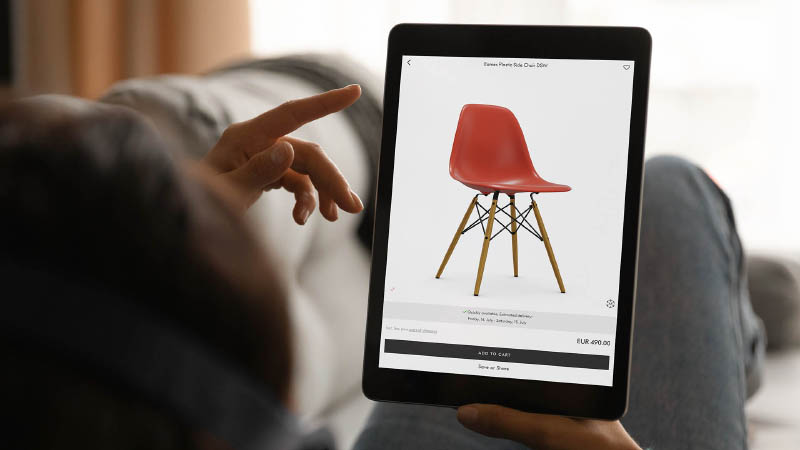

Today’s consumers expect shopping experiences tailored precisely to their individual preferences. Ecommerce product customization meets this demand by empowering businesses to offer highly customized products that drive user engagement, customer loyalty and sales.
But what exactly is product customization, and how can eCommerce businesses leverage it strategically to enhance their competitive edge?
Key takeaways
- Online product customization boosts customer engagement by enabling unique, tailored shopping experiences.
- Leveraging interactive product customizers can significantly enhance the overall customer experience.
- Product customzization improves key business metrics like conversions, return rates and customer satisfaction.
- Choosing the right customization tools and features ensures seamless integration into your existing ecommerce processes.
- Successful eCommerce personalization strategies prioritize real-time customization and dynamic product visualization.
FREE RESOURCE
3D Configurator Project Planning Template
Use our ready-to-fill, 20-question template to map out your project in under an hour and build a budget-safe, fully aligned plan from day one!

What is eCommerce customization?
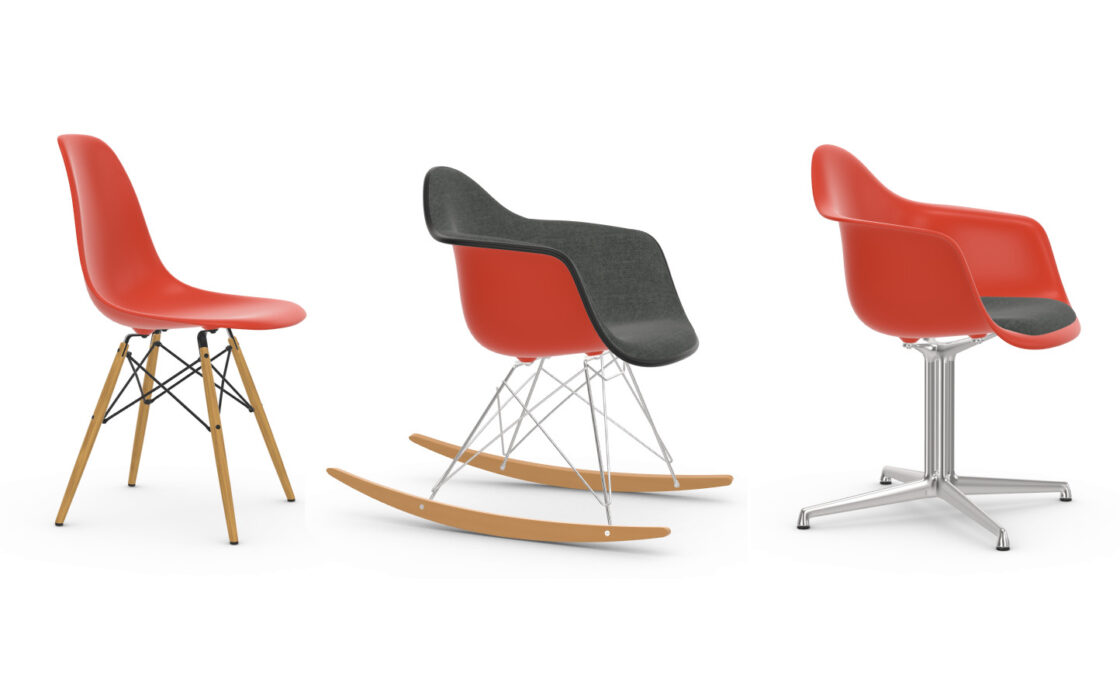
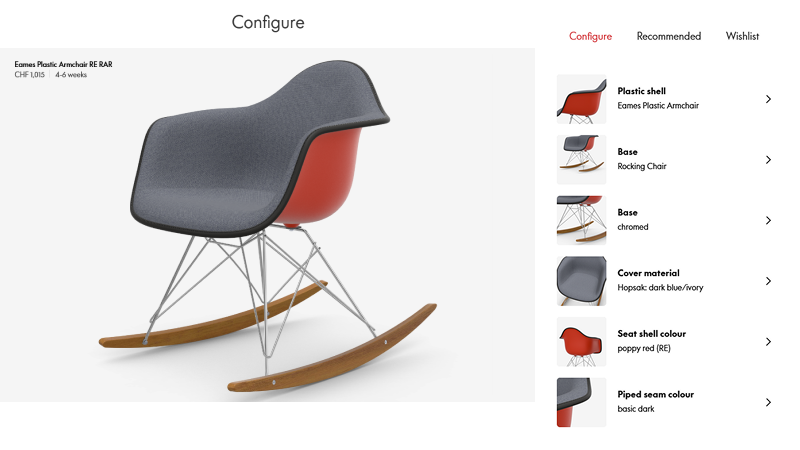
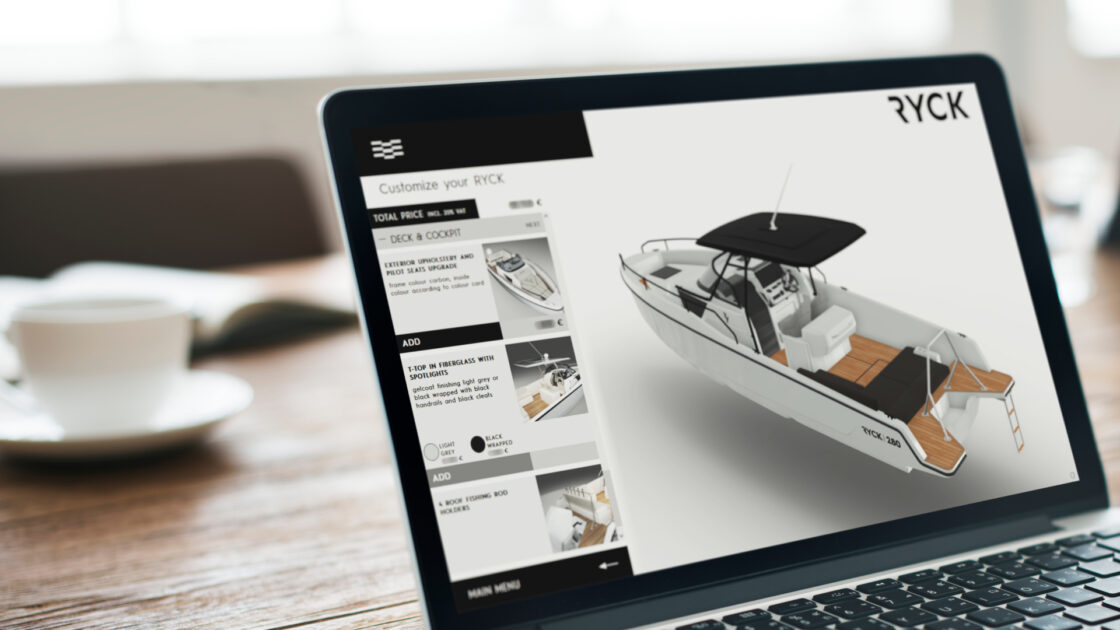
Product customization in eCommerce is when brands let customers actively shape all or part of a product to their own taste, rather than choosing from a fixed, pre-defined catalog. This can be as simple as adding a name or a monogram to a standard item. It can also mean choosing from different color and material options for all or parts of the product. Some brands go further still and let customers configure entirely new product variants by combining multiple components, accessoriesand finishes. We cover product configuration in more depth in our dedicated guide to 3D product configurators.
Enabling these customization options usually calls for dedicated customization tools, from personalization software to full 3D configuration platforms. We look at how to choose between them later in this guide.
What is the difference between customization and personalization?
Customization and personalization are often used interchangeably, but they describe two different processes.
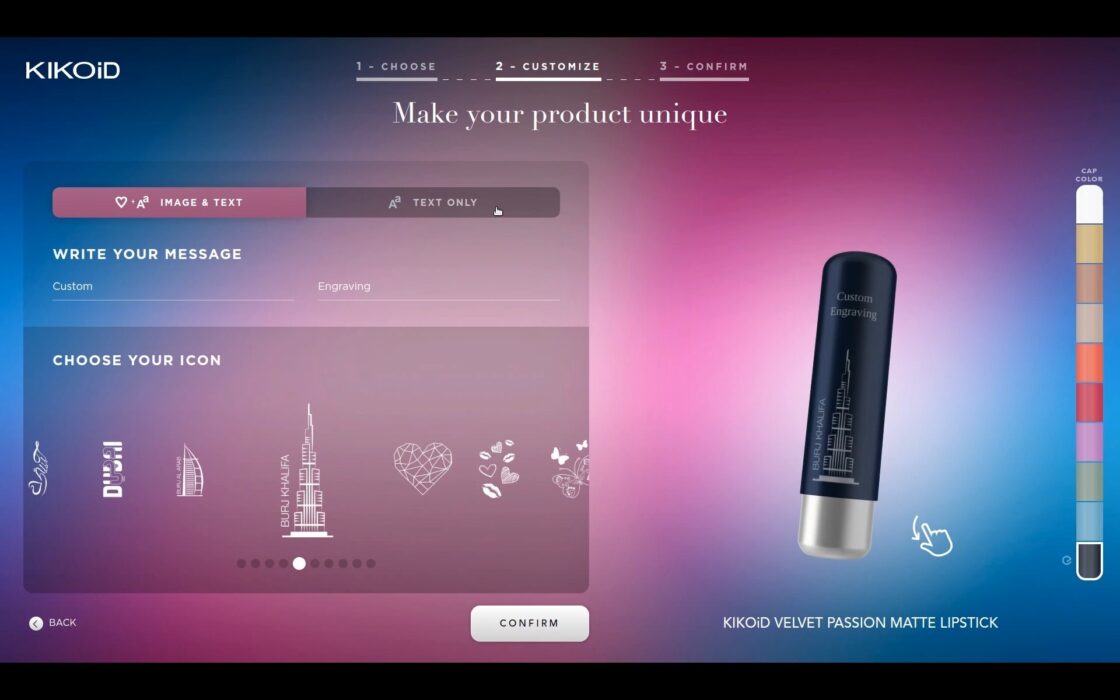
- Personalization is where brands enable customers to create a unique version of their product by adding something personal such as initials, a name, a special message, an image, or a logo. This increases the perceived value of an off-the-shelf product without requiring a fully customized production process. Instead of setting up a full made-to-order production line, brands only need to invest in the equipment they will use to add the personalization options to an existing product, such as printers, heat presses, or engravers.
- Customization allows customers to tailor products to their specific tastes and preferences by selecting from predefined options such as colors, materials, or patterns. This enables customers to co-create a product with the brand, enhancing their emotional connection to both the product and the brand.
Rather than distinguishing personalization and customization, brands often combine them to offer highly tailored products that align with individual preferences and include personal touches.
What are the most common product customization and personalization techniques?
The right technique depends on the product itself, the material it’s made from and how much of it customers should be able to change.
Effective personalization techniques :
- Engraving or embossing: a name, initials, a date or a short message is cut or pressed directly into the surface of the product. Common on jewelry, watches, knives, leather goods and metal or wood items.
- Embroidery: thread is stitched into fabric to add a name, initials, a logo or a design. Typically used on apparel, bags, caps and other textile products.
- Direct digital printing: an image, a logo or text is printed directly onto the product’s surface. Often used for apparel, accessories, packaging and promotional items that need full-color designs.
Manufacturing customized products
- Product assembly: components are pre-manufactured in a range of colors, materials or finishes, then assembled to order and finished with the customer’s personal touches. This lets brands offer a wide range of combinations without holding stock for every possible variant.
- Made-to-order: nothing is pre-manufactured. Production only starts once the customer’s order and specifications are confirmed, which unlocks the widest range of customization options but required a more flexible production process.
What are the main product customization benefits?
Offering online product customization is only worthwhile if it moves the metrics that matter to your business. Four outcomes consistently show up when online retailers introduce product customization: a better customer experience, increased sales, fewer returns and stronger brand loyalty.

Improved customer experience
The online shopping experience often lacks the tactile, sensory richness of a physical store. Customization helps bridge that gap. A well-designed customizer with real-time, interactive previews enables customers to users actively co-create their product instead of scrolling through static images. This makes the user experience more unique and engaging, creating a stronger emotional connection to both the product and the brand.
The best online product customizers offer shoppers precise, real-time previews of their choices so they know exactly what the product will look like before they buy. This confidence, combined with the sense of ownership that comes from shaping the product themselves, is what makes a personalized experience feel genuinely satisfying rather than just transactional. For most brands, this is the fastest way of enhancing customer experience without a full site redesign.

Increased conversion & boosted sales
Product customization has been shown to increase conversion rates. Customization is about empowering the customer to create a product that reflects their personality. By allowing them to make choices about color, material or design, the product becomes more meaningful and relevant. This active participation increases the likelihood that they will follow through with a purchase.
A product built to a customer’s exact preferences carries more value in their eyes than an item from from the standard catalog, which is why customized products can often command a higher price than their standard equivalents.
The customization process itself is also a source of customer behavior and preferences data. Every choice a customer makes, from the colors they favor to the options they skip, provides you with insights about their preferences. Feeding that customer data into your marketing campaigns lets you retarget them with the personalized product recommendations, based on the colors or configurations they’ve already shown interest in.
Reduced return rates
Most returns come from unmet expectations. Letting customers preview their customized product in detail before they buy, whether through high-quality imagery, real-time 3D visualization or a clear configuration summary, closes the gap between what they ordered and what arrives. Fewer surprises at delivery mean fewer returns and higher rates of customer satisfaction.

Increased loyalty and differentiation
Offering personalized or customizable products positions your brand as flexible, modern and customer-centric. It’s not just about the product; it’s about offering personalized experiences. When done right, the online customization journey itself becomes a memorable, rewarding touchpoint that increases customer loyalty. A smooth, well-designed experience can become the reason customers come back, again and again, reinforcing brand fidelity far beyond the initial purchase.
In competitive markets where acquisition costs keep rising, personalization and customization can be strategic levers to increase lifetime value and profitability.
FREE RESOURCE
3D Configurator Project Planning Template
Use our ready-to-fill, 20-question template to map out your project in under an hour and build a budget-safe, fully aligned plan from day one!

How to successfully implement Product Customization in eCommerce?
Selling customized products online isn’t just about offering more choices. It’s about eCommerce sellers creating the right experience around those choices. To succeed, companies must offer the best online customization experience, then prepare and deliver a product that perfectly meets the customer’s expectations, matching exactly what they customized online.
1. Create the best possible online customization experience
The quality of the experience matters just as much as the product itself. A frictionless, enjoyable customization journey builds confidence, encourages conversion and lays the foundation for brand loyalty.
Here’s what matters most:
- A simple and intuitive interface: customers shouldn’t need instructions to customize a product. Provide an intuitive and easy-to-use interface that lets customers personalize products without technical barriers. The process should be self-explanatory, responsive and mobile-friendly to support shopping on any device.
- Progressive, guided steps: avoid overwhelming users with too many choices at once. Break the customization journey into logical steps with clear visuals and prompts to keep them engaged.
- Real-time visualization in stunning detail: this is the single most important feature. Customers need to see what they’re creating in real time. The more accurately they can preview the final result, the more confident they’ll feel making the purchase. High-quality, true-to-life previews reduce uncertainty and bring the product to life before it even exists.
- Optimized performance: customization tools must load quickly, respond instantly and work reliably across devices. Any lag, glitch or complexity can derail the purchase.
Above all, treat personalization as part of your core eCommerce UX, not an additional, experimental feature.
Ultimately, you’re not just selling a product. You’re designing a personalized experience that reflects the quality and value of your brand.
2. Set up a production workflow that matches what customers designed online
Behind every successful personalized product lies a reliable and efficient production system. Companies must ensure that what customers see and choose online is precisely reflected in the final product, down to the last detail.
- Connect to your order management system: integrating the product customizer with your OMS ensures that each order includes the exact options selected and is trackable from design to delivery.
- Generate production-ready files: automatically create the files needed for printing, engraving or embroidery based on the customer’s design, including any text, images or logos. This is often one of the most technically challenging parts of the process. Files must meet strict production criteria in terms of resolution, color calibration, size and positioning. Companies that want to offer personalization at scale cannot afford to manually prepare each file. Instead, they need solutions that can automate the generation of production-ready files and verify them before they are routed to the appropriate machine.
- Store a preview of each order: keep a visual reference of the final design to double-check that the personalized elements are correctly placed and applied.
Remember: an efficient production line ensures accuracy, reduces human error and delivers on the promise of a customized product. This is the key to gaining consumer trust and satisfaction at scale.
What tools can businesses use for effective online product personalization?
Some businesses choose to build a fully custom product personalizer from scratch with their own team of developers. While this can offer flexibility, it often involves a long development timeline and significant resource allocation. For brands looking to go faster without compromising on quality, SaaS solutions offer a more efficient and scalable way to deliver high-level customization across product lines and markets.
Exploring different types of product personalization software
SaaS solutions for product personalization come in many forms. The main differences between platforms lie in:
- The type of product visualization they offer
- The level of uniqueness and complexity they can support
- Their ability to scale and integrate across your business operations
1. The type of product visualization
Basic 2D solutions work like layered systems, where customer inputs, such as text or images, are overlaid on top of static product visuals. These visuals might be mock-ups, photos or pre-rendered 3D images, usually from one or two fixed viewpoints like front and back. While easy to implement, this static approach limits the customer’s understanding of the product.
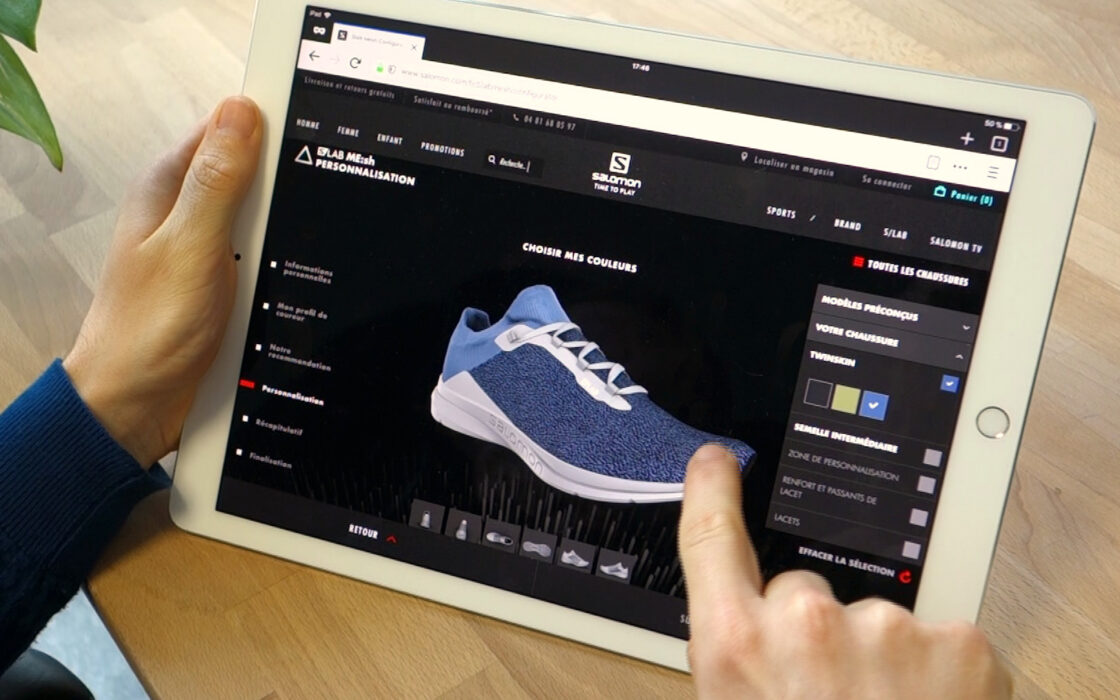
In contrast, interactive or real-time 3D visualization provides a dynamic and engaging experience. Shoppers can rotate, zoom and explore every angle of the product, adjusting custom options as they go. This builds confidence in what they’re buying and significantly enhances the product experience.
2. The level of uniqueness of the project
Not all platforms are built to handle the same level of product complexity or interface personalization. Companies must evaluate how unique their offering is: what kind of customization options do you need? Are you offering color and material choices, conditional logic or unlimited image and logo placement?
Equally important is the customer interface. Some solutions come with a fixed, templated UI. Others allow for custom interfaces aligned with your brand’s design and UX standards. The more unique your experience, the more critical it is to select a platform that supports full customization.
3. The scale of the project
A company offering personalized notebooks on a single product page doesn’t have the same needs as a company personalizing sports gear across entire collections. Businesses should evaluate how they’ll produce customized products at scale, then choose a solution that integrates smoothly with their eCommerce stack and order management systems.
The right platform will allow teams to:
- Seamlessly embed the customizer into their online store
- Automate order tracking and production workflows
- Generate high quality production files for print on demand workflows
- Generate, manage and update multiple product configurators efficiently
Choosing a solution that grows with your operations is essential to avoid roadblocks as demand increases.
What key features should your product customizer include?
Beyond the type of visualization or level of integration, the success of your personalization project depends on choosing a tool with the right features to deliver a seamless and engaging experience that gives your customers clarity and confidence and your teams operational efficiency.

High-quality real-time 3D visualization
Real-time 3D visualization is no longer a nice-to-have, it’s a baseline expectation for premium product personalization. High-fidelity rendering, true-to-life materials and real-time interaction reduce hesitation and make the product feel real before it exists. This level of transparency directly boosts conversion and lowers return rates.

Augmented reality previews
Letting customers preview personalized products in their real environment via AR bridges the gap between digital and physical. AR previews help customers validate size, color and style in context, reinforcing trust and the emotional impact of their purchase.

Mobile-responsive interface
With mobile now dominating eCommerce traffic, your customizer needs to work flawlessly on all screen sizes. A mobile-responsive design lets every customer personalize, preview and purchase without friction, whether they’re on a desktop or a smartphone.
Save and resume capability
Customers rarely complete complex purchases in one sitting. A save and resume feature lets them return later to finish their design without starting over. It also opens the door to reminder emails that nudge them back toward completing their purchase.

Dynamic pricing
When customers build a custom product, they need clear visibility on how each choice affects the final price. A dynamic pricing engine updates the total in real time as they add options, giving customers full cost transparency while letting your business automate the quotation process.

Visual order summary
The final step before checkout is where confidence is won or lost. A clear visual summary, with the customer’s options and images of the finished product, lets them double-check every detail and reduces abandoned carts caused by last-minute doubts.
Social sharing features
Letting customers share their personalized creations on social media turns them into advocates. It’s a free, authentic form of marketing that adds pride and emotional connection to the purchase. Done well, it also gives prospective buyers new inspiration through user-generated content.

Seamless integration with eCommerce and order management tools
Even the best product customizer won’t deliver results if it’s isolated from the rest of your tech stack. It should integrate easily with your eCommerce platform and your order management system (OMS), so every order flows smoothly from customization to checkout to production without manual intervention, data loss or delays.
Bonus feature: Image vectorization and color control
If customers can upload their own logos or graphics, your tool should handle the technical side automatically. Image vectorization converts uploads such as JPEG, PNG and TIFF files into clean, scalable vector files such as SVG, PDF and EPS that are compatible with printing or engraving machines. Even better, allow customers to recolor their logo using Pantone or PMS codes. This ensures color accuracy during production and helps brands maintain visual consistency.
Real-life success stories: Companies winning with online product personalization
Victorinox: Personalization at scale for corporate gifting
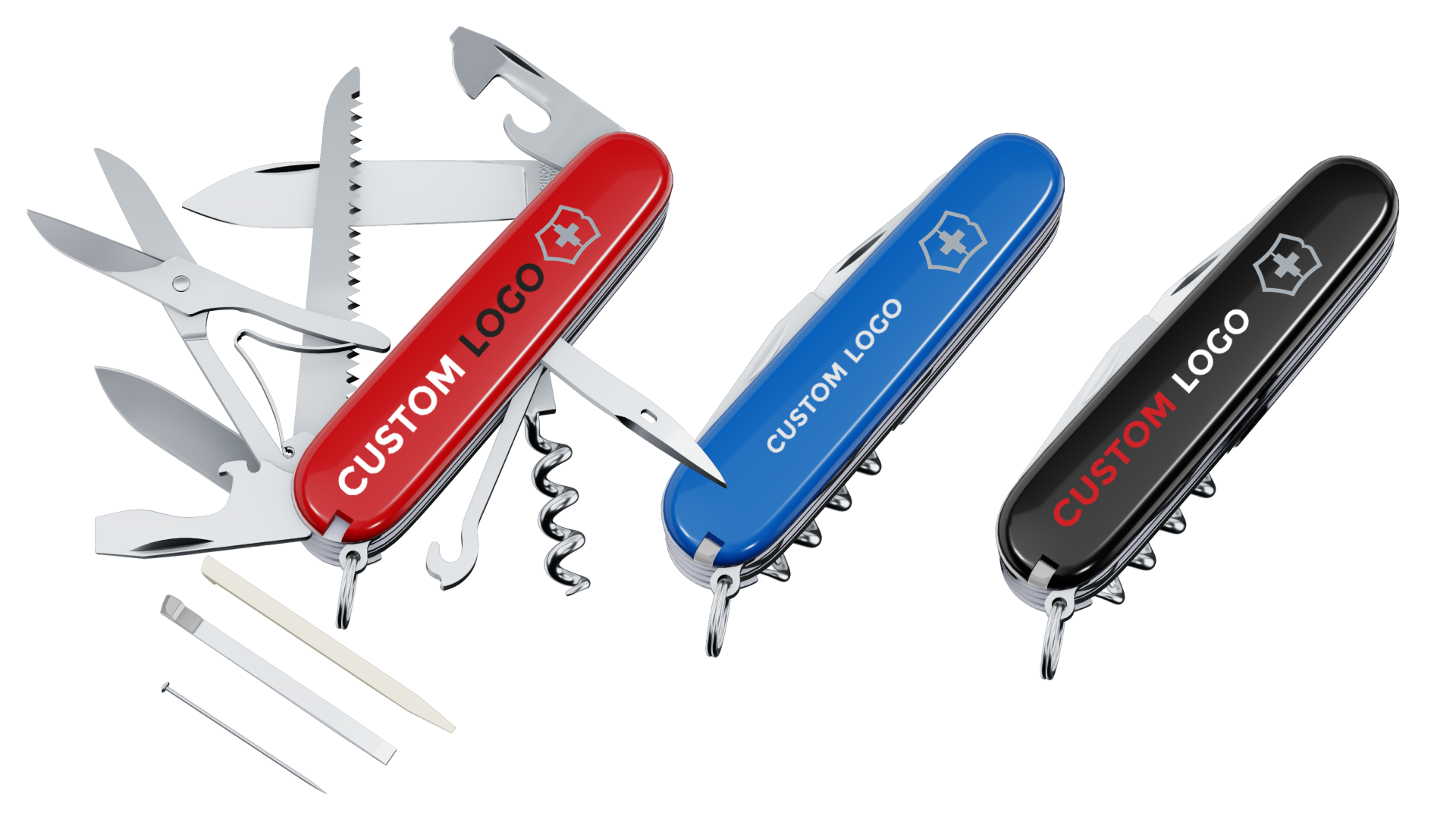
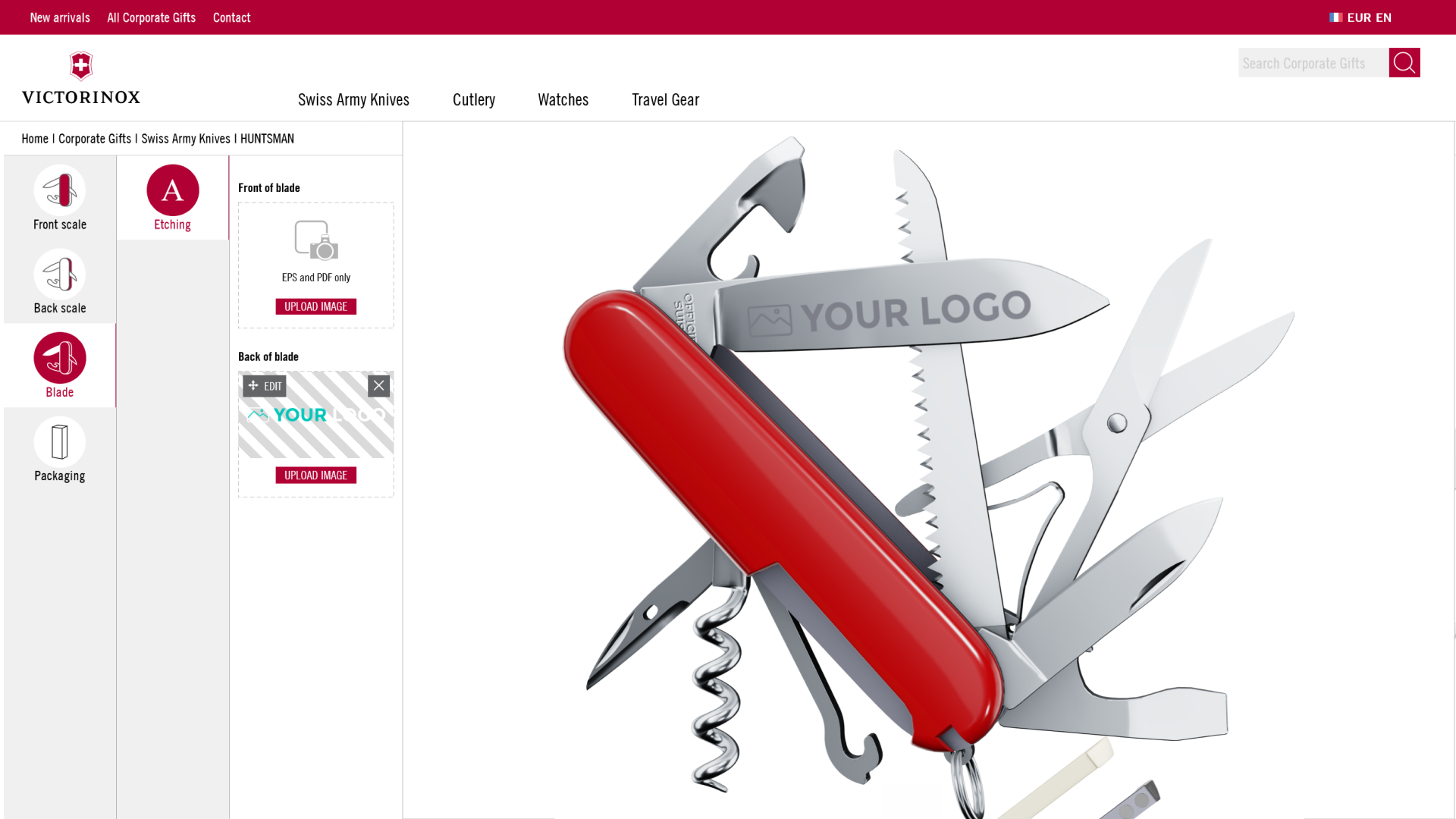
Victorinox, renowned for its Swiss Army knives, has made product personalization a central part of its global strategy, in both B2C and B2B. For its Corporate Business Service, Victorinox set out to modernize and streamline its B2B offer by taking the online personalization of corporate gifts to the next level.
Key challenges Victorinox wanted to overcome:
- Improve the digital presentation of its product offer, in line with its premium brand image
- Simplify and digitize the traditionally manual quotation and ordering process
- Empower customers and resellers with a tool to visualize and configure gifts independently
The personalization experience
Victorinox chose the Emersya platform to build a real-time 3D customizer that empowers customers to explore and personalize any product in the online corporate gift range. Customers can upload custom graphics, logos or text that reflect their corporate identity, apply them directly on the interactive 3D product preview and even define the Pantone colors. The result is a simple, fast and intuitive experience that aligns with the brand’s high standards of quality and precision.
Impact on customer engagement and sales
- Over 2.2 million CHF in quote requests generated in Switzerland within the first year
- Increased customer engagement thanks to a more interactive and self-directed experience
- Improved perception of product quality and value through high-end 3D visuals
- Easier decision-making for end customers with real-time previews and sharing options
Benefits for Victorinox teams and resellers
- A dynamic online catalog available 24/7, accessible to both internal teams and partners
- Faster response times and reduced reliance on traditional quote workflows
- Improved support for sales presentations with high-quality, visual tools
- A more consistent and scalable personalization process across international markets
Discover the full Victorinox success story
Dainese: Bringing bespoke customization to passionate riders
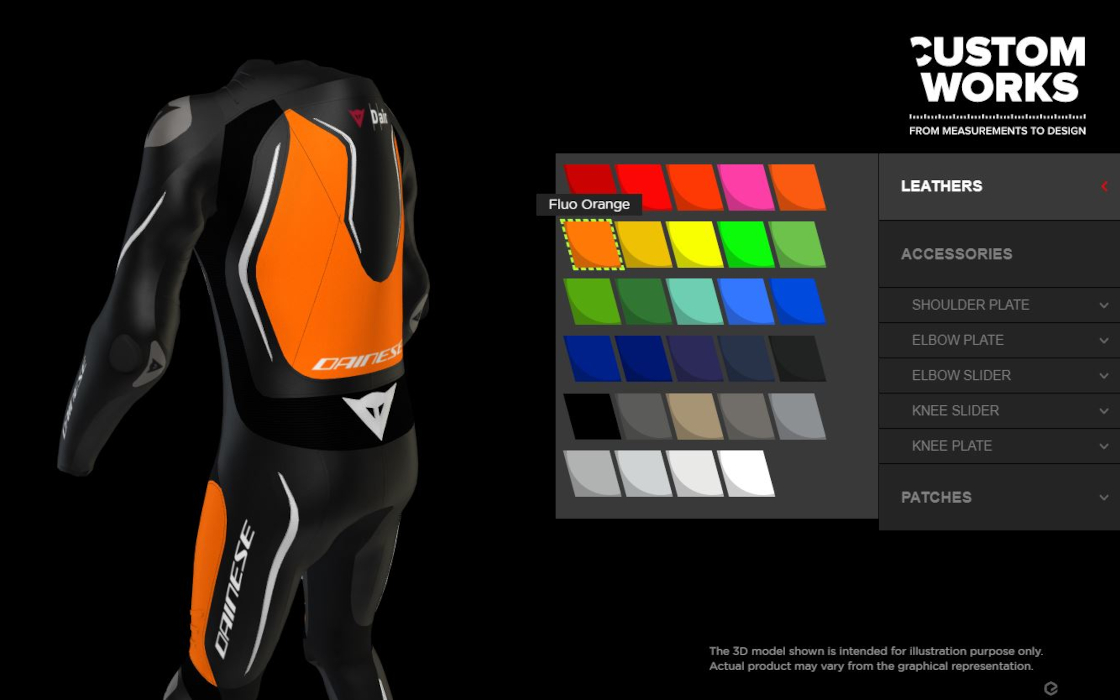
Dainese is a world-renowned manufacturer of high-performance motorcycle gear, trusted by the most famous professional riders for decades. Known for its made-to-measure leather suits, the brand wanted to make this exclusive experience accessible to a wider audience, empowering more riders to create their own custom suits online.
Key objectives for the project:
- Offering the prestige of a bespoke suit to non-professional riders
- Making the configuration process more engaging and self-directed
- Streamlining the buyer journey from design to order placement
Using Emersya’s technology, Dainese created an online customizer that empowers customers to pick the colors of each part of their suit and apply images, logos, text and numbers, with real-time interactive 3D previews.
Impact on customer engagement
- Increased time spent on product pages through active exploration
- Higher emotional connection thanks to a personalized, immersive experience
- A smoother, more confident path to purchase for high-value products
Impact on Dainese’s bespoke sales process:
- Customers can independently design and order their custom suit online, automating what was traditionally a manual and assisted process
- Built-in pricing provides real-time transparency for the customer and eliminates the need for a separate quotation phase
- Each order is automatically sent to Dainese’s back office with a unique customer code, preview images and complete configuration details, streamlining the workflow and reducing the risk of manual errors
Discover the full Dainese success story
FREE RESOURCE
3D Configurator Project Planning Template
Use our ready-to-fill, 20-question template to map out your project in under an hour and build a budget-safe, fully aligned plan from day one!
Conclusion: Why online product customization is worth the investment
Product customization has moved from a nice differentiator to a core customer expectation of the online shopping experience. It boosts customer engagement, increases conversions, reduces returns and drives higher satisfaction by giving shoppers clarity, confidence and control. For brands, offering product customization strengthens loyalty and reinforces a premium image that stands out in a crowded market.
With personalization becoming one of the most popular eCommerce trends, the benefits of offering a seamless, interactive and scalable experience are too valuable to overlook. Whether you’re already selling customizable products or just starting to explore the possibilities, now is the perfect moment to define your strategy and start shaping an online customizer that exceeds your customers’ expectations.
At Emersya, we’ve spent over 10 years helping brands bring both personalization and customization to their online stores, from monogrammed leather goods to fully interactive 3D configurators. Our real-time 3D and AR technology gives customers a visually stunning, intuitive way to customize a product in real-time, while giving your team a single platform to manage it at scale. If you’re ready to explore what an online customizer could look like for your products, get in touch with our team.
Frequently Asked Questions
Product customization is one of the most direct personalization tactics available in eCommerce, since it hands the decision to the customer instead of an algorithm. When you implement personalization as a broader strategy, customization usually sits alongside data-driven tactics like personalized recommendations, targeted campaigns and dynamic content: those tactics decide what to show a customer, while customization lets the customer decide what to build. Combining both tends to work best, using data to guide customers toward the right starting point, then letting them finish shaping the product themselves. Because it doesn’t depend on customer data models, customization is also one of the simplest personalization efforts for a brand to launch first.
The cost depends heavily on which technique you choose and how far you take it. Adding simple options like engraving or embroidery to an existing product line can often be layered onto equipment you already use, keeping upfront costs relatively low. A full interactive 3D customizer or configurator is a bigger investment, since it typically involves a software subscription plus 3D asset creation and possibly integration work with your eCommerce and order management systems.
For a detailed breakdown of what drives configurator pricing up or down, see our cost guide. Its principles for budgeting a 3D project apply broadly to most digital customization tools, not just configurators.
Yes. Product customization is no longer reserved for large enterprises with big budgets. Lower-cost entry points exist for almost every technique. Engraving and embroidery can often run on equipment a business already owns. No-code SaaS platforms have also made 3D customization accessible without an in-house development team. Most platforms, including Emersya’s, offer plans scaled to different project sizes rather than a single enterprise-only price point.
The more realistic question for smaller businesses isn’t whether they can afford customization, but which technique and scope makes sense for their current volume and budget. Starting narrow, with one product line or one customization option, is a common and effective way in.
Product customization creates value in almost any category where the product itself carries personal or aesthetic significance, but a few industries stand out.
Luxury goods and jewelry benefit from customization’s ability to make an already high-value item feel one of a kind, reinforcing the premium price point. Fashion, footwear and sports equipment benefit from the sheer number of viable color, material and component combinations customers want to choose from. Furniture and home goods benefit because customers are committing to a piece they’ll live with for years, so being able to match it precisely to their space matters more than for lower-consideration purchases. Industrial and technical products benefit differently, since customization there is often about configuring the right functional specification rather than aesthetics.
Outside of these categories, any brand selling a product with meaningful variation, whether in appearance, fit or function, is a reasonable candidate for customization.